
A broken or old gas line is a serious problem, and tearing up your yard to fix it used to be the only way. Now there is a much better option available for homeowners. This guide covers everything you need to know about how to replace a gas line without digging, from the first shut-off to the final pressure test.
You do not need to be a contractor to follow along. Every step is written in plain language so you always know what is happening and why. Whether you are dealing with a small leak or a fully corroded pipe, this guide has you covered.
Gas lines do not last forever. Over time pipes can corrode, crack, or start to leak. Some older homes still have cast iron or steel pipes that were put in decades ago.
Common signs that you may need home gas line replacement in Salt Lake City:
If you see any of these signs do not wait. Gas leaks are dangerous and the faster you act the better.
The old way to fix or swap out a gas line was to dig a big trench from one end of the pipe to the other. That means tearing up your lawn, your driveway, or even parts of your garden,Trenchless gas line replacement is the newer method. It uses small access holes, sometimes just two to pull a new pipe through the ground without digging a full trench. The old pipe either stays in place and the new one goes around it, or gets broken apart as the new pipe moves in.
This saves time, saves money, and keeps your yard looking the way it did before the job started.
Before anything else, the gas needs to be shut off. Find your main gas shut-off valve; it is usually near the meter outside your home. Turn it off completely. Never start any gas line work with the gas still on.
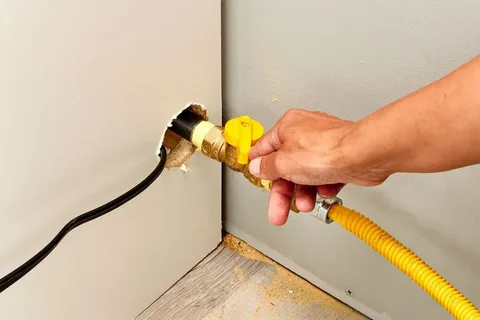
A gas line valve replacement may also be needed at this stage. The valve controls the flow of gas into a section of your pipe. If the valve is old, stuck, or corroded, swap it out before moving on. A bad valve can cause problems even after a brand-new pipe is in place.
Use a pipe wrench to remove the old valve. Put in a new ball valve that matches the pipe size. Make sure it opens and closes smoothly before moving to the next step.
You need to know exactly where your gas line runs before you dig even a small hole. Call 811 before you dig. This service marks all underground lines: gas, water, and electric.
Do this at least a few days before your planned start date. It is required by law in most states.
Even with trenchless gas line replacement, you still need small access pits at both ends of the damaged section. These are usually a few feet wide and deep enough to reach the pipe.
This is much less work than a full trench, but you still need to dig carefully near the pipe area.
A tool is pushed through the old pipe. As it moves, it breaks the old pipe and pulls a new HDPE pipe in behind it. This works well when the old pipe is badly damaged.
A flexible liner coated with resin is inserted into the old pipe. Once it hardens, it forms a new pipe inside the old one. This works when the pipe has cracks but is still mostly intact.
For most home gas line replacement jobs, pipe bursting is the most common method because it fully replaces the system.
Once setup is complete, the new pipe is pulled through from one access pit to the other. This process is fast and efficient with modern equipment.
Make sure the pipe is rated for gas use. HDPE and coated steel are common options. Do not use PVC because it is not approved for gas lines.
Once installed underground, the new line must be connected to your home gas system, including the meter and internal connections.
This is the stage where most homeowners hire a professional gas fitter. Local plumbing hub handles gas connections in Salt Lake City to ensure safe installation
After installation, the line must be pressure tested before gas is turned back on. A pressure gauge is attached, and air or nitrogen is used to test the system.
If pressure stays stable, the line is safe. If it drops, there is a leak.
Never skip this step.
Once testing passes, turn the gas back on slowly. Use leak detection spray or soapy water on all joints.
If bubbles appear, there is a leak that must be fixed immediately. Also check appliances like the stove, furnace, and water heater.
Some parts of how to replace a gas line without digging can be done by homeowners, such as turning off gas, calling 811, and digging access pits.
However, pipe installation and gas connections should always be handled by trained professionals. Incorrect work can lead to leaks, fire hazards, and insurance issues.
Costs depend on line length, soil condition, and method used. In most cases, trenchless gas line replacement is cheaper than full excavation once yard repair costs are included.
Always get multiple quotes and confirm that permits, testing, and cleanup are included.
Pull a Permit: Most cities require a permit for gas line work.
Check Your Soil: Trenchless methods work best in stable soil.
Know Your Existing Pipe Type: Older pipes may need different handling methods.
Inform Your Gas Company: Some utilities must be notified before work begins.
Knowing how to replace a gas line without digging gives homeowners a safer and cleaner option. Trenchless gas line replacement is now widely used because it reduces damage and saves time. Whether you need a gas line valve replacement, full home gas line replacement, or small repair, following the correct process is essential.
Always plan properly, call before digging, test the line, and involve professionals for gas connections. Local plumbing hub supports Salt Lake City homeowners with safe solutions.
Yes and it is actually one of the more common jobs done around Salt Lake City now. Local plumbing Hub handles these jobs without touching the rest of your yard.
You do, Salt Lake City requires one before any home gas line replacement work starts. Local Plumbing Hub takes care of the permit side so that is one less thing on your plate.
It depends on the length of the line and what condition the old pipe is in. Replacing gas lines the trenchless way usually comes out cheaper than the old dig-everything-up method once you add up the yard repairs.
A valve that sticks, will not fully close, or looks corroded is already past its point. A gas line valve replacement needs to happen before anything else gets touched on that line.
Most jobs wrap up in a day or two. How to replace a gas line without digging the trenchless way moves a lot faster than traditional open trench work because there is no full yard to dig up and fill back in.